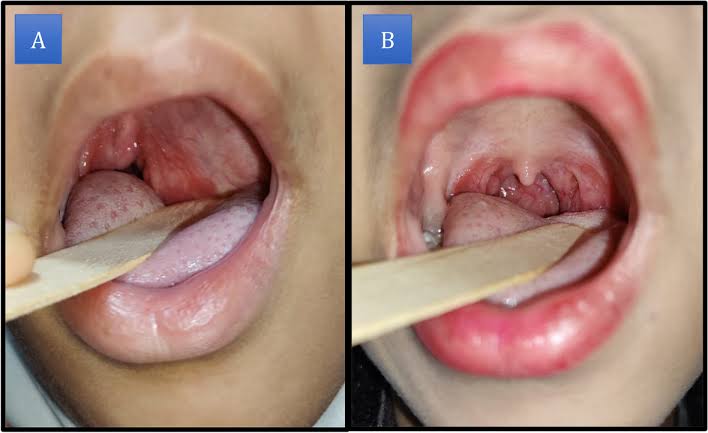
When a 64-year-old American man looked into the mirror one morning, he noticed something so strange that he immediately feared the worst. His tongue, once completely normal, had developed an unusual green coating covered with what appeared to be tiny hairs. The bizarre transformation seemed to worsen day after day, leaving him increasingly worried about what was happening inside his body.
At first glance, the condition looked like something straight out of a medical horror story. Friends and family were shocked by the appearance of his tongue, and even healthcare professionals initially struggled to explain the unusual symptoms. What looked like hair growing inside his mouth was unlike anything most people had ever seen.
The man decided to seek medical help after realizing the strange coating wasn’t disappearing on its own. Although he wasn’t experiencing severe pain, the appearance of his tongue was alarming enough to convince him that something serious might be wrong.
Doctors carefully examined his mouth and immediately considered several possible explanations. Oral infections, fungal diseases, nutritional deficiencies, and even rare immune disorders were all discussed as potential causes. Since many oral conditions can produce white or colored patches, the medical team initially believed they were dealing with a fairly common infection.
To be safe, physicians prescribed medication commonly used to treat fungal infections of the mouth. They expected the unusual coating to disappear within days.
Instead, nothing changed.
The green discoloration remained, and the hair-like structures covering the tongue became even more noticeable. As treatment failed, doctors realized they needed to investigate further.
The patient’s medical history became increasingly important.
He explained that the discoloration had developed gradually over the course of about two weeks. Before noticing the changes, he had been in generally good health aside from a recent dental problem. He had completed treatment for an infection affecting his gums and had followed his doctor’s instructions exactly.
Medical specialists began asking detailed questions about his daily habits.
Did he smoke?
Did he drink excessive amounts of coffee or tea?
Had he recently changed his diet?
Was he taking any new medications?
Did he brush his tongue regularly?
Each answer helped eliminate some possibilities while making others more likely.
The appearance of the tongue itself fascinated doctors. The tiny projections covering its surface looked remarkably similar to strands of hair. In reality, they weren’t actual hairs at all.
Instead, these “hairs” were elongated filiform papillae—small structures that normally cover the tongue. Under ordinary circumstances, these papillae constantly shed old cells while new ones replace them. In this patient’s case, that natural process had slowed dramatically.
As layer after layer of keratin accumulated, the papillae became longer and longer until they resembled fine hairs. Food particles, bacteria, and microorganisms then became trapped between them, producing the unusual green color that made the condition appear even more dramatic.
Although the condition looked frightening, doctors reassured the patient that it was not contagious.
It also wasn’t cancer.
Nor was it a sign that real hair had somehow begun growing inside his mouth.
The medical team explained that similar cases had occasionally been reported around the world, although they remain relatively uncommon. The condition often causes more psychological distress than physical discomfort because its appearance is so unusual.
Fortunately, treatment proved surprisingly simple.
Rather than requiring surgery or expensive medication, the patient was instructed to improve his oral hygiene. Doctors recommended gently brushing the surface of his tongue several times each day using a soft toothbrush. This would gradually remove the excess keratin and allow the tongue to return to its normal appearance.
He was also encouraged to stay well hydrated and pay closer attention to oral care.
Over the following months, the strange coating slowly disappeared.
By the time he returned for a follow-up examination six months later, his tongue looked completely normal again. The green discoloration had vanished, and the hair-like projections had almost entirely disappeared.
The remarkable recovery confirmed that the frightening condition was fully reversible.
But one question still remained.
What had caused such an extraordinary transformation in the first place?
After reviewing the patient’s medical history and eliminating other possible explanations, doctors reached their conclusion.
The man had recently completed a course of the antibiotic clindamycin, prescribed for a gum infection. Medical experts believe the medication temporarily disrupted the normal balance of bacteria inside his mouth. Combined with his long-term smoking habit, this allowed dead keratin to accumulate on the tongue’s surface instead of shedding naturally.
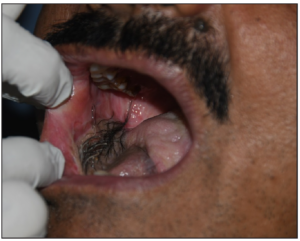
The result was a rare condition known as hairy tongue, which can cause the tongue to appear green, brown, yellow, black—or, in especially unusual cases, as though real hair is growing from it.
Although the photographs shocked many people after the case was published in a medical journal, physicians emphasized that hairy tongue is generally harmless and usually disappears with proper oral hygiene and by addressing the factors that trigger it.
The case serves as a powerful reminder that even widely used antibiotics can occasionally contribute to rare side effects. While such reactions are uncommon, experts advise anyone who notices unexpected changes after taking medication to consult a healthcare professional rather than attempting self-treatment.
For this American patient, what looked like one of the strangest medical mysteries imaginable ultimately had a reassuring ending: no dangerous disease, no permanent damage, and no real hair growing inside his mouth—just a rare condition with an unforgettable appearance and a surprisingly simple explanation.