There are moments in celebrity culture that become impossible to ignore. A single performance, photograph, or music video can instantly transform the way millions of people see a public figure. For Miley Cyrus, one of those defining moments arrived during a period when she was determined to leave her Disney Channel image behind and reinvent herself as an artist.
What happened next shocked audiences around the world.
For years, Miley had been known as the cheerful star of “Hannah Montana,” a role that made her one of the most recognizable young entertainers on the planet. Millions of children grew up watching her on television, and parents viewed her as a relatively safe role model. But as she entered adulthood, Miley faced a challenge that many former child stars encounter: convincing the world that she had grown up.
The transformation did not happen quietly.
Instead, it unfolded in front of cameras, social media audiences, and entertainment reporters who followed every move she made. With each new appearance, interview, and performance, Miley seemed determined to break expectations and establish an entirely new identity.
Then came a music video that immediately became a global talking point.
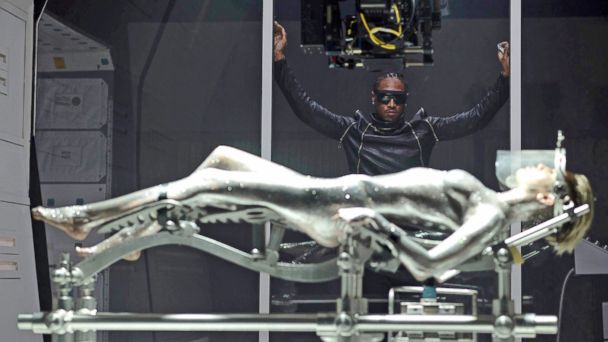
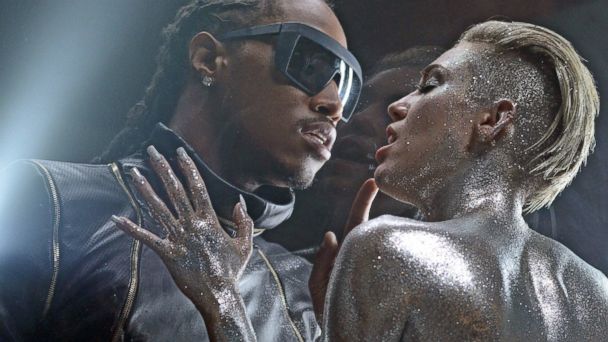
The project involved rapper Future and his song “Real and True.” Promotional images released ahead of the video’s debut showed Miley in a striking and unexpected artistic look. Covered entirely in metallic silver body paint, she appeared almost unrecognizable, portraying a futuristic character that looked more like a science-fiction creation than a traditional pop star. The unusual visuals instantly generated headlines across entertainment media.
Fans were fascinated.
Some praised the artistic direction and admired Miley’s willingness to experiment creatively. Others were shocked by how dramatically different the images were from the wholesome public image that had defined her early career.
The conversation spread rapidly across the internet.
Social media users shared the photos, debated their meaning, and speculated about what Miley was trying to communicate through her latest artistic choices. Entertainment websites published article after article analyzing her evolving image.
But the music video was only part of a much larger story.
During that period of her career, Miley was actively redefining herself. Her album “Bangerz” marked a major turning point, introducing a sound and visual style that differed dramatically from her earlier work. Collaborators close to the project spoke about encouraging her to embrace her emotions, fears, and personal experiences through music.
The strategy worked.
People who had never paid attention to Miley’s music suddenly found themselves discussing her. Some admired her boldness. Others criticized her choices. Yet regardless of opinion, nearly everyone seemed to be talking about her.
That level of attention transformed Miley into one of the most discussed celebrities of the decade.
The reaction demonstrated how powerful image can be in modern entertainment. A carefully designed visual concept could generate as much publicity as a hit song. Every new photo, performance, and appearance became a cultural event.
At the same time, Miley insisted that people often focused on the wrong things.
In interviews surrounding other projects from that era, she suggested that audiences sometimes became distracted by provocative visuals and failed to notice the emotional messages behind the music. She argued that many of her songs reflected personal experiences and genuine feelings rather than simple attempts to shock the public.
Whether people agreed or not, her comments revealed an important aspect of her artistic evolution.
She wanted to be viewed as more than a former child star.
The challenge was enormous. Few entertainers successfully transition from family-friendly television icons into adult performers. Public expectations can be difficult to escape, especially when audiences feel a strong attachment to an earlier version of a celebrity.
Miley confronted that challenge head-on.
Instead of making gradual changes, she often chose dramatic ones. Her performances, music videos, and fashion choices consistently pushed boundaries. As a result, she became one of the most polarizing figures in entertainment.
Some people loved the transformation.
They viewed it as an example of artistic freedom and personal growth. Others believed she had gone too far in her efforts to separate herself from her Disney past.
The debates became part of her brand.
Years later, people still discuss that period of her career. Online communities continue revisiting her performances, videos, and public appearances from that era, often debating whether the criticism she received was justified or excessive.
Interestingly, public opinion eventually evolved.
As Miley matured and continued developing as a musician, many former critics began reevaluating her work. Some argued that she had been ahead of her time. Others acknowledged that the intense scrutiny she faced was partly a consequence of growing up under constant public observation.
Today, Miley Cyrus is widely recognized as a successful recording artist with a career that extends far beyond controversy.
Yet the images from projects like “Real and True” remain important because they represent a critical moment in her evolution. They captured a period when she was willing to take risks, challenge expectations, and reinvent herself regardless of public reaction.
Not every celebrity would have been willing to make such a dramatic transformation.
But Miley did.
And whether audiences viewed those choices as controversial, artistic, shocking, or courageous, they undeniably achieved one thing: they ensured that the world paid attention.
More than a decade later, people still remember the images, the conversations, and the headlines they generated. That alone demonstrates the lasting impact of a moment that helped redefine one of the most recognizable entertainers of her generation.