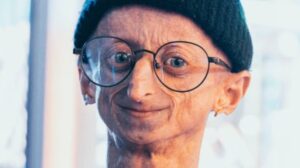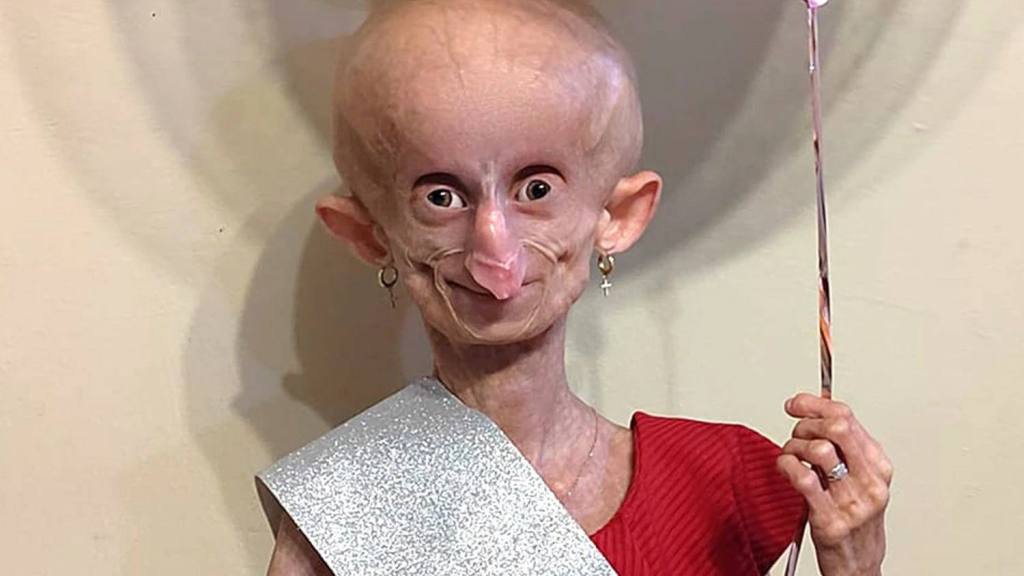
When Michiel Vandeweert shared a photograph or a video online, there was usually something more important behind it than simply another social-media post.
Sometimes it was a joke. Sometimes it was a glimpse into his everyday life. Sometimes it was a holiday photograph, a conversation with his sister or a moment that many people might have taken for granted.
Michiel had a remarkable ability to make ordinary moments feel important.
Thousands of people followed his life online, watching as he traveled, laughed, created content and spoke openly about experiences that most people could never fully understand.
He did not present his life as a tragedy.
Instead, he showed people what it meant to live with determination, humor and curiosity.
Now, his followers are facing a very different kind of post.
Michiel Vandeweert has died at the age of 28.
His family confirmed his death in a statement reported by Belgian broadcaster VRT NWS, and the news was subsequently reported internationally, including by PEOPLE.
For those who had followed him online, the announcement was particularly painful because Michiel had spent years showing the world how much life he wanted to experience.
His story had begun with a diagnosis that changed everything.
As a child, Michiel was diagnosed with Hutchinson-Gilford progeria syndrome, an extremely rare genetic condition in which children experience an accelerated aging process.
For families receiving such a diagnosis, the future can suddenly look very different.
Progeria is associated with a significantly shortened life expectancy. According to information cited in the reports about Michiel, children with the condition have often been expected to live to around 15 years of age.
But Michiel’s own story would eventually become an extraordinary exception.
When he was young, doctors reportedly told him that he might live only until the age of 12.
Twelve.
For most children, that number would represent only the beginning of life.
There would normally be years of school ahead, teenage experiences, friendships, holidays, adulthood and countless ordinary moments that most people never have to think about losing.
Michiel, however, had to grow up knowing that time was something he could not take for granted.
And yet, he continued forward.
Rather than allowing his diagnosis to become the only story people knew about him, Michiel and his family began sharing their experiences publicly.
His sister Amber also had the same syndrome.
Together, the siblings gave people a rare opportunity to see what everyday life with progeria actually looked like.
Their social-media accounts became much more than medical diaries.
They showed humor.
They showed family life.
They showed travel.
They showed moments of happiness.
And sometimes they showed Michiel simply being Michiel.
One photograph from 2022 captured that attitude particularly well.
Michiel was pictured during a beach holiday and jokingly wrote that he had “a bigger ego than muscles.”
It was a small joke, but it revealed something important about the way he approached life.
He could laugh at himself.
He could enjoy the moment.
He could make fun of a situation instead of allowing it to define him.
That sense of humor became part of his public identity.
Over time, Michiel built an audience across Instagram, YouTube and Twitch. Together, the platforms attracted more than 90,000 followers.
That meant people were not simply reading about progeria.
They were getting to know the person living with it.
Michiel also became involved in a documentary with his sister.
How To Be Alive: Amber and Michiel premiered earlier in 2026 and offered another opportunity for audiences to see their lives and experiences.
The title itself was fitting.
The focus was not simply on illness.
It was on being alive.
That distinction mattered.
Because Michiel’s life could easily have been reduced to a medical diagnosis.
Instead, he became known for something much broader.
He was a brother.
A content creator.
A football supporter.
A traveler.
A person with friends, interests, humor and dreams.
He was also a devoted supporter of Belgian football club KRC Genk.
When news of his death emerged, the club paid tribute to him on Instagram, describing him as someone who loved life and whose courage and positivity had inspired many people.
Local officials also remembered him.
Rik Kriekels, mayor of Diepenbeek, where Michiel lived, said that people often complain about the smallest things and suggested that seeing how Michiel lived his life could be deeply inspiring.
Those tributes help explain why his death has affected so many people.
Michiel was not famous because he played a character in a movie or because he had spent decades on television.
He became known because he chose to let people see his real life.
And that made the connection with his audience particularly personal.
People watched him grow older.
They saw him joke.
They saw him travel.
They saw him spend time with his sister.
They watched someone who had been given a very limited expectation of time repeatedly prove that life could still contain unexpected chapters.
And then came the detail that makes his story so extraordinary.
Michiel did not die at 12.
He did not die at 15.
He did not even come close to the age doctors had originally predicted he would reach.
He lived to 28 years old.
That means he lived approximately 16 years beyond the age of 12 that doctors had once told him he might reach.
In doing so, he became one of the oldest known people with progeria, according to VRT NWS.
For 16 additional years, Michiel continued doing things that once might have seemed impossible.
He created content.
He traveled.
He laughed.
He spent time with his sister.
He shared his life with tens of thousands of followers.
And perhaps most importantly, he continued to live rather than simply count the years he had been told he might have.
Now those years have come to an end.
But the final chapter of Michiel’s story is not simply the age at which he died.
It is everything that happened between the prediction of 12 and the reality of 28.
Sixteen extra years.
Sixteen years that were never guaranteed.
Sixteen years filled with experiences, family moments, humor, photographs, videos and memories shared with people around the world.
That is why the news of his death has prompted such an emotional response.
Michiel’s story was never really about a number.
It was about what a person can do with the time they have — even when that time is expected to be much shorter than everyone else’s.
And now, after 28 remarkable years, the young man who once had been told he might not see his teenage years has left behind something that cannot be measured by a medical prognosis.
A huge collection of memories.
A sister who shared his journey.
A family who stood beside him.
Thousands of followers who watched his story.
And a message that may remain long after his final post: sometimes the most unexpected years can become the most unforgettable ones.