Leonardo DiCaprio is one of those rare figures whose name alone carries decades of cinematic history. For more than thirty years, he has dominated the screen, moving effortlessly from heartthrob to serious dramatic actor, from rebellious newcomer to respected Hollywood legend. From the moment he appeared as Jack Dawson in Titanic, his face became instantly recognizable across the globe. Posters, magazine covers, red carpets, award shows — millions learned every angle of his smile. And yet, paradoxically, in real life, Leonardo DiCaprio seems determined to make that same face disappear.
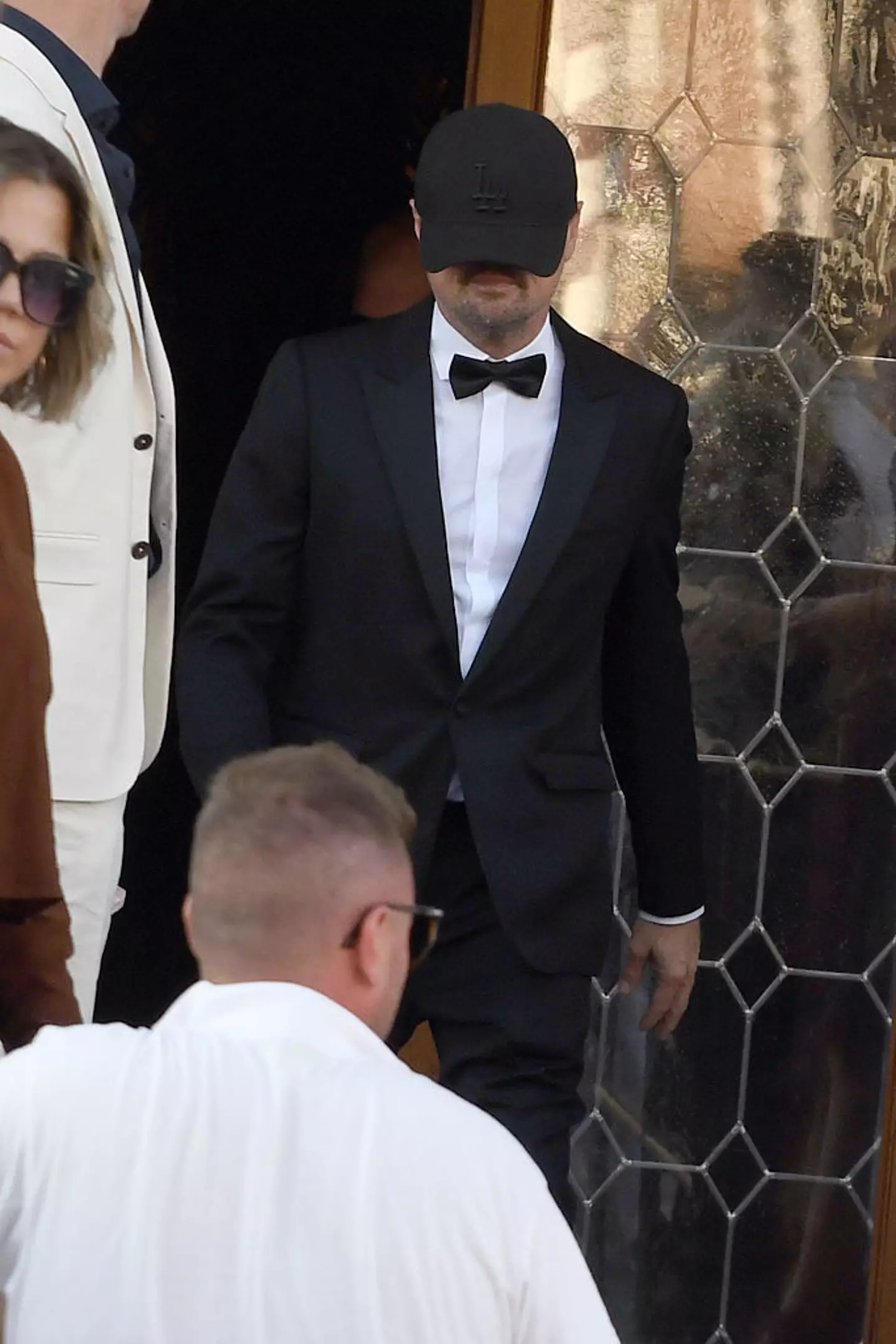
Step outside the polished world of premieres and press tours, and a different DiCaprio emerges. One hidden beneath baseball caps pulled low over his eyes. One shielded by face masks, oversized hoodies, dark sunglasses. A man who looks like he is constantly trying to blend into the background, even though blending in is nearly impossible when you are one of the most famous actors on Earth. For years, fans have laughed, speculated, and shared photos online, asking the same question again and again: Why does Leonardo DiCaprio always hide his face?
The answer, it turns out, is far deeper than a simple dislike of paparazzi.
Every public sighting seems to follow a familiar pattern. A late-night dinner in Paris. A casual walk with his girlfriend. A quick coffee run in Los Angeles. There he is — anonymous clothing, head down, avoiding eye contact. To outsiders, it looks almost theatrical, as if he is playing a role even off-screen. Some fans joke that the disguise is pointless, because “everyone still knows it’s him.” Others interpret it as arrogance, mystery, or even paranoia. But DiCaprio himself has finally spoken plainly about the mindset behind this habit, and his explanation reveals a man who has spent a lifetime negotiating with fame.
At the heart of his philosophy lies a simple but striking idea: visibility should be earned, not constant.
In a rare moment of openness, DiCaprio explained that he believes in appearing publicly only when he has something meaningful to offer. A film. A performance. A message worth sharing. Outside of that, he prefers to disappear. Not out of fear, but out of intention. For him, fame is not a lifestyle to be lived every day — it is a tool to be used carefully.
This way of thinking did not develop overnight. It was shaped by one of the most intense fame explosions in modern pop culture history. When Titanic was released, DiCaprio was just 22 years old. Overnight, he became more than an actor — he became a global obsession. Fans screamed his name in the streets. His face was everywhere. Every move, every relationship, every expression was analyzed, exaggerated, and sold. What many saw as a dream come true was, for him, a moment that permanently changed how he related to the world.
That level of attention does not simply fade when the cameras turn off. It lingers. It follows you into restaurants, onto airplanes, into private moments. Over time, DiCaprio realized that constant exposure came at a cost — emotional, psychological, and creative. Being always visible meant being always consumed. And for someone who cared deeply about his craft, that was dangerous.
Instead of rejecting fame entirely, he chose a middle path. On screen, he gives everything. On red carpets, he shows up. During interviews and award seasons, he speaks clearly and thoughtfully. But outside those boundaries, he draws a firm line. His personal life is not a performance.

Privacy, for DiCaprio, is not about secrecy — it is about survival. It is the space where he can think, observe, recharge, and remain grounded. It is where relationships can exist without being turned into headlines. It is where mistakes can happen without becoming scandals. And most importantly, it is where creativity can grow without interference.
This approach also explains why he has managed something rare in Hollywood: longevity without burnout. While many stars of his generation struggled with overexposure, tabloid drama, or fading relevance, DiCaprio steadily built a career defined by carefully chosen roles. He avoided becoming a constant media presence. He allowed absence to create anticipation. When he returned to the spotlight, it was usually for something that mattered.
Ironically, the very act of hiding his face has only increased public fascination. The internet thrives on paradoxes, and DiCaprio embodies one perfectly: a man everyone recognizes, trying not to be seen. Social media reacts with humor, memes, and endless debates. Some accuse him of trying too hard. Others defend him fiercely, pointing out that no one truly understands the pressure of that level of fame unless they have lived it.
What often gets lost in the jokes is the discipline behind his choices. DiCaprio is not running away from the world. He is curating his presence in it. He understands that mystery can be powerful, that silence can protect meaning, and that constant exposure can erode both identity and art.
There is also a deeper emotional truth beneath his words. Fame freezes people in time. To the public, Leonardo DiCaprio will always be Jack from Titanic, regardless of how many decades pass. By hiding his face in everyday life, he creates a separation between who he is and who the world expects him to be. It is a quiet rebellion against being reduced to an image.
In an era where celebrities share every detail online, where visibility is currency and privacy is treated as weakness, DiCaprio’s approach feels almost radical. He chooses restraint over oversharing. Distance over accessibility. Purpose over noise. And that choice has sparked conversation precisely because it goes against the modern grain.
Ultimately, the reason Leonardo DiCaprio hides his face has nothing to do with arrogance or fear. It is about control. About choosing when to speak and when to be silent. When to be seen and when to step back into the shadows. It is the strategy of a man who learned early that fame can take more than it gives — unless you guard yourself carefully.
And perhaps that is why, even after all these years, the world is still watching. Not just because of the roles he plays on screen, but because of the quiet, deliberate role he plays in real life: the superstar who understands that sometimes, the most powerful statement is to disappear.